The Marathon as a Life Transition Event
Months of training, not race day, make the marathon a rite of passage.

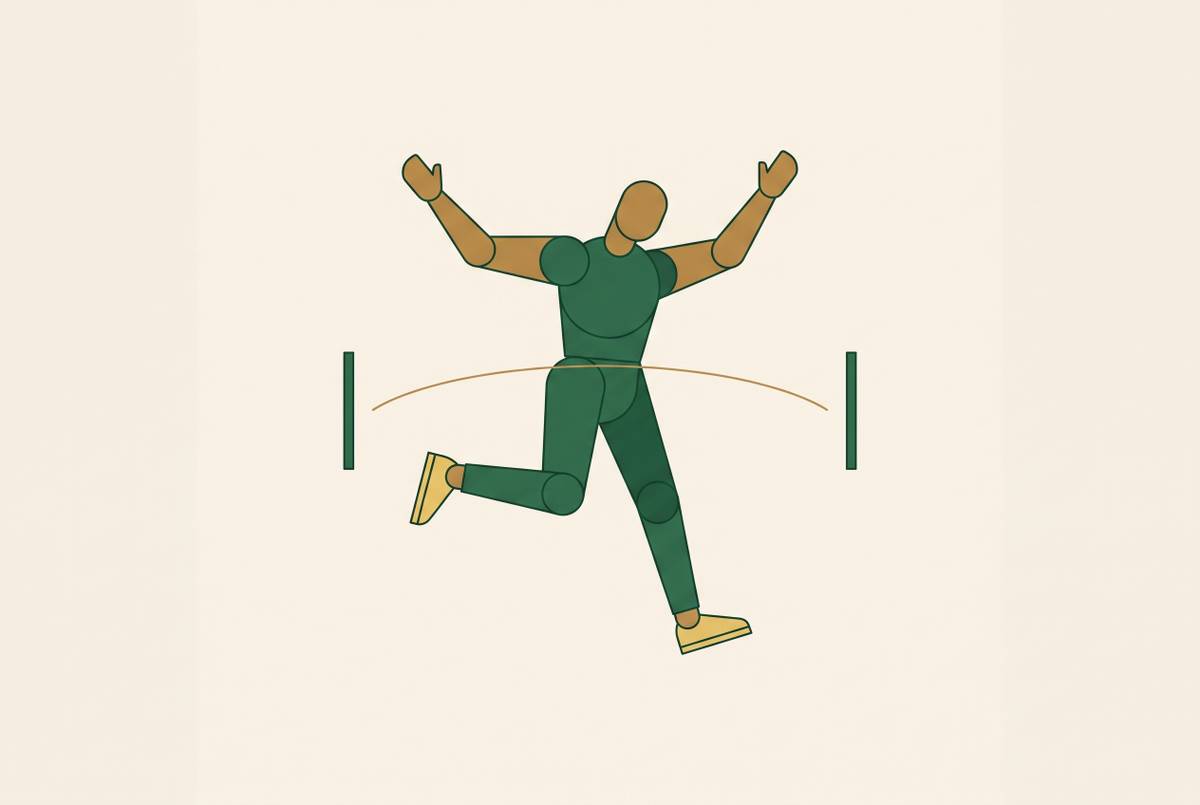
The marathon has become a life transition event because it gives personal change a visible structure. A runner commits to the race, trains hard for months, and finishes in front of others. Its power comes less from how a runner performs on one day than from how they learn to face difficulty in the months before it. The finish marks that change, while the objects kept afterward help make it tangible.
Why the marathon has become a cultural milestone, not just a race distance
The marathon occupies a distinct place in the public imagination. It is the distance non-runners name, and completing one is spoken of with the seriousness attached to once-in-a-lifetime personal milestones. Shorter races and ultramarathons are demanding in their own ways, but neither has quite the same place in the public mind. Recognition extends well beyond the people who run. That shared understanding gives a marathon finish significance even among people who know little about training or race performance.
The 46th London Marathon surpassed even the previous year’s record. The range of people seeking a place also reveals the different purposes a single race can serve. People enter the same race to compete, run for charity, pay tribute, or mark a change in their lives.
The 2026 Boston Marathon, its 130th edition, included a former astronaut, a former first daughter, and a grandfather-granddaughter duo completing their first Boston together. These entrants do not make the race less athletic. Rather, their presence shows how an athletic event can also mark a chapter in lives defined by much more than running. A marathon can be both a sporting contest and a public acknowledgment of something deeply private. Does that combination make it a modern rite of passage?
What makes something a rite of passage, and how the marathon fits the structure
A rite of passage has a recognizable structure, including a threshold decision, a period of ordeal, and a transformation that is marked and witnessed. The term is useful here without requiring an elaborate anthropological argument. It describes how a difficult undertaking can separate one stage of life from another. The ordeal gives the change substance. Public recognition then gives it a form that other people can understand.
Registration establishes the threshold because it turns an intention into a commitment. Many runners tell others they have entered before training begins, so people know their goal and can hold them to it. Training is the ordeal because runners have to meet its demands again and again, beyond one outstanding effort. The finish line, medal, and shared story provide the marking. In this structure, race day is the ceremony at the end of a process already lived.
Runners may enter to honor a lost loved one, mark recovery, respond to a diagnosis, or prove something after a difficult period. The distance gives each of these meanings a demanding, recognizable form. What might otherwise remain a private wish for change becomes a commitment with a start, an ordeal, and a witnessed completion. That is why the preparation deserves as much attention as the result.
The months before the start line, where the real change happens
How runners sleep, eat, make plans with friends, and use their energy comes to depend on the long run and the work around it. A standard buildup moves through base, build, peak, and taper, each with a specific physiological purpose. Skipping phases makes injury more likely and takes a toll on race day. Following this structure does more than build fitness, because runners have to keep fitting daily life around a goal that is still far off.
The InLife group who finished the TBR InLife Dream Marathon 2026 on February 15, 2026 completed twenty-two weeks of training. Their accounts describe clearing self-doubt, strengthening friendships, and rediscovering self-discipline. These are individual illustrations of change. Their timing is nevertheless important to the argument. The runners said these benefits took shape during training, before others could see them finish.
Dustin Nitro described training as demanding “sustained effort, accountability to a goal, and the ability to follow through on a demanding, long-term commitment”. Diane Tabafunda connected the experience to her hiking era, observing that “growth happens when you willingly step into discomfort”. Rommel Aquitania, who finished his first marathon at 42 in the rain, credited the people around him as much as the training. His account places companionship within the ordeal.
Even the reduction in work can expose how deeply preparation has taken hold. The taper deliberately reduces mileage in the final weeks, yet many runners find that change psychologically destabilizing. The schedule that demanded so much has also become a source of daily identity. By the time the runner reaches the start, preparation has already altered routines, relationships, and expectations of what can be sustained.
Why the finish line lands as hard as it does
Crossing a line takes seconds, but the emotion belongs to the months behind it. At the finish, runners carry with them the early mornings, missed time with friends, bodily discomfort, and doubts. As they cross the line, others can see what those private costs have led to. That is why the response can appear disproportionate. The visible act is small compared with the experience it brings to completion.
The witnesses are also part of the ordeal itself. Pacers, spectators, aid stations, and fellow runners help each runner make their own effort in a race they share. Their presence makes the finish more than a private judgment that enough has been done. Other people have helped sustain the attempt and can recognize its completion. Aquitania’s acknowledgment of the people around him gives this communal structure a human scale, showing why gratitude can belong within the achievement.
Carlos and Mia Sanchez provided another expression of that shared meaning at the 2026 Boston Marathon. They were the first documented grandfather-granddaughter duo to qualify for and complete the race in the same year. The milestone was not merely a pair of recorded performances. It was also their first Boston together. The family relationship gave the accomplishment a meaning that a finishing time alone could not express.
For runners whose preparation has changed their understanding of themselves, this public moment marks more than the end of exertion. It recognizes a person who has followed through. Yet the ceremony cannot preserve its own intensity indefinitely, and the runner leaves the finish with more experience than the moment itself can contain. What follows is the task of finding a lasting form for that change.
How runners try to hold onto a finish that is over in seconds
The finisher’s medal gives a temporary event a durable physical form. It connects preparation, race day, and accomplishment in an object the runner can keep. Its shared design is part of its role, identifying the recipient with everyone who completed that event. The token belongs to a collective achievement. That strength also sets a limit, because it does not distinguish one runner’s reasons, preparation, or performance from another’s.
The 2026 Boston Marathon introduced a redesigned finisher’s medal, golden on a blue and gold ribbon and manufactured by Ashworth Awards in North Attleborough. Even the standard token is treated as worthy of reinvention. A runner may want not only evidence of finishing but a record of the particular course and result. The distinction is between membership in an event and the shape of one person’s experience within it.
A GPS trace provides material for that more specific record. It is the literal line the runner’s body drew through a city, which can become a route map. Custom marathon posters built from GPX or Strava data are widely available, including prints for the Boston, New York, Chicago, London, Berlin, and Tokyo courses. A line on a map can identify where the effort happened without attempting to explain every feeling attached to it.
Etsy sellers offer NYC Marathon 2026 map prints with the runner’s finish time and Chicago Marathon 2026 route posters made from Strava or GPX data. Framed embroidery featuring a stitched Chicago Marathon route dated October 11, 2026 is also available. These examples preserve specificity through each format’s connection to this course, this time, and this person.
Why made-to-order objects carry more weight than mass-produced ones for this kind of milestone
A marathon can be repeated, but a particular finish cannot. Its meaning belongs to the circumstances that led to it, the people involved, and the runner’s life at that point. This singularity explains the appeal of made-to-order commemoration. A standard object can recognize the event. A personalized one can recognize the individual transition that occurred within it.
The made-to-order model begins with the person’s course, data, and details. Production follows once those particulars are confirmed. Personalization is therefore more than a name added to a general running theme. The details establish which achievement the object exists to remember.
Embroidery gives those details a lasting form with a look of its own. A name or route becomes a stitched feature of the material, with the visible signal of intentional making. The medium gives the significance of the finish a personal finish unique to the runner.
The same distinction applies when the keepsake is a gift. A generic running gift acknowledges an interest, while a personalized commemorative object acknowledges what the recipient actually completed. The course and race details make that recognition precise. For a runner whose marathon marked recovery, loss, or new faith in themselves, these exact details let the gift mark the milestone without speaking for them. The object can hold the particulars while leaving their deeper meaning with the person who lived them.
The marathon as a before-and-after: what stays changed
The lasting transition is a different relationship to difficulty. Runners frequently describe a change in how they understand their capacity after completing the distance. Obstacles that once appeared fixed can seem more negotiable because sustained effort now has a tested result. The runner can draw on having finished when they feel unsure about taking on another hard task.
That change does not mean every future difficulty becomes manageable through the same methods. The InLife accounts use expressions including “heroic proof” and “reaffirmation of faith”. These are claims about identity and belief. They help explain why a result can still matter long after the first glow of finishing has faded.
A medal, map, or embroidered course makes the before-and-after visible on days when the sense of change is harder to feel. The object need not explain the entire experience. Its role is to connect an ordinary moment with something witnessed, recorded, and completed. In that sense, commemoration is not vanity but a way of making sense of what happened.
For the runner who has just finished, or is approaching the start after months of preparation, the significance may extend beyond what the clock will record. The effort has already taken up a large part of the runner’s life. A lasting keepsake gives that period a place in the life that follows, preserving not only the fact of a finish but the connection to the person who worked toward it.