Race Commemoration Beyond the Finish Line Photo
GPS data can capture the months and miles a finish photo misses.

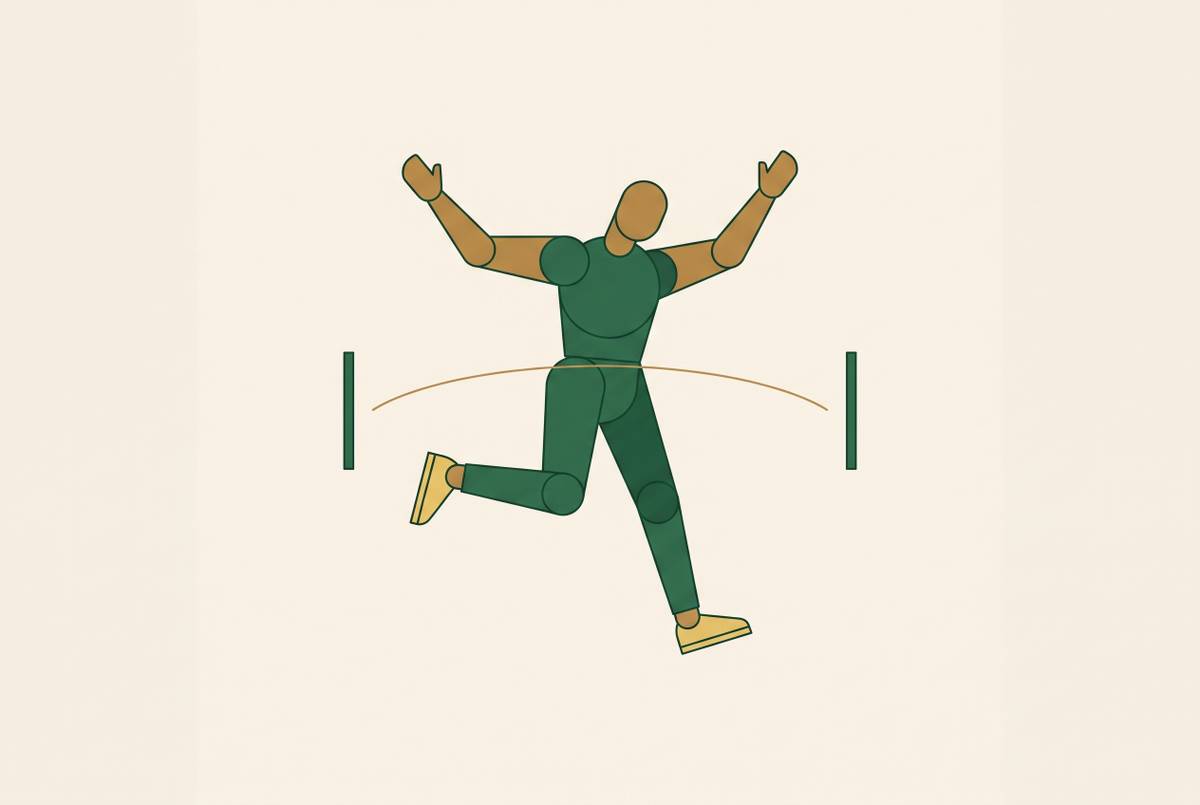
Arms raised, bib number legible, the digital clock overhead frozen mid-count: this is the image every race produces, and it is the one most runners take home. The photograph documents arrival. It proves that a body crossed a timing mat at a specific moment, nothing more and nothing less. What it does not show is the course beneath that runner's feet over the full distance leading up to that moment, the months of early mornings that made the crossing possible, or the private reason that runner lined up at the start in the first place. The limits of the photo are structural, built into what a photograph can capture. The 2025 TCS New York City Marathon drew 59,226 finishers and set an all-time finisher record for the race, and nearly every one of those finishers produced a nearly identical photograph: raised arms, readable bib, frozen clock. Multiply that sameness across tens of thousands of runners on a single November Sunday, and the photo's limitation becomes obvious. It cannot distinguish one runner's race from another's, because it was never built to.
Why Finishing a Race Carries More Emotional Weight Than the Photo
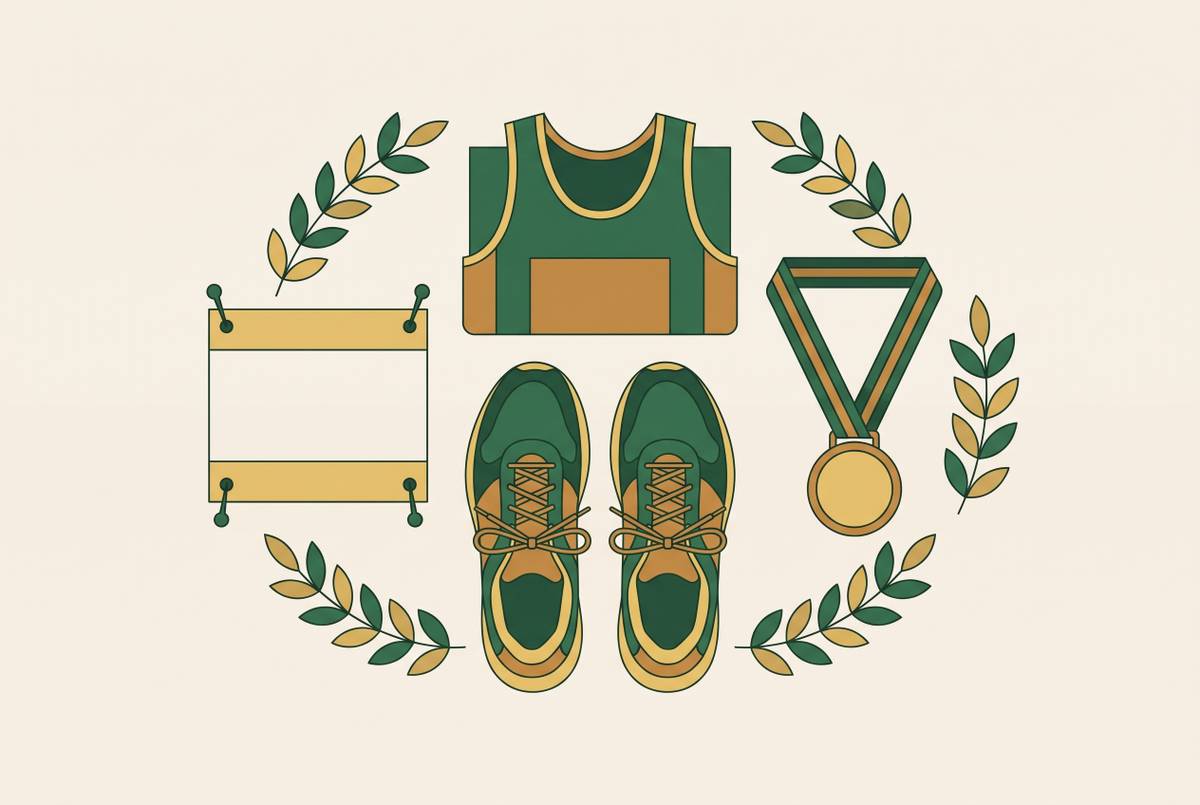
The sameness of the image belies the weight of what it marks. For most runners, a marathon is not a contest against the field but a negotiation with the self, conducted over months and settled in the final mile. The finish line is where that negotiation resolves, and the moment has always demanded more than a snapshot can offer. Finisher medals exist for exactly this reason: they are the original answer to the problem of marking a finish with something a runner can hold. Race culture has long understood medals as symbols of mental fortitude and personal growth rather than simple souvenirs of a day out. One major ultramarathon has built an entire tiered medal system around this idea, awarding different medals based on finishing time bands, so that the object itself encodes something about the specific effort behind it. New York City runners have their own tradition of engraving finisher medals with name, time, and date, turning a mass-produced object into a personal record. But the medal is given to every finisher who crosses, regardless of what the race meant to them. The story the medal stands in for lives entirely outside the object, in the training and the course and the reason that runner showed up. The medal, in other words, already knows its own limit. That is precisely why runners and the people who love them keep reaching for something more.
What the training buildup actually represents
The months before the race are the story, and any commemoration that begins at the finish line has already missed most of it. A marathon training cycle runs many weeks and accumulates hundreds of individual runs before a runner ever reaches the start corral, and none of that labor appears in the finish-line photograph. The shape of a buildup follows its own arc: an early aerobic base, a build phase with longer and harder efforts, a peak long run, and then a taper that strips volume away in the final weeks before the race. That arc is as individual as the runner moving through it, shaped by injury history, work schedule, and the specific goal driving the training. Research on marathon runner motivation backs this up with real texture: runners three months out from race day tend to focus on health, psychological coping, self-esteem, and life meaning, and that focus shifts significantly about one month before the race, when competition and personal goal achievement take over. The buildup, in other words, has its own emotional stages, distinct from the race itself and arguably just as formative. What makes this story recoverable rather than merely remembered is a fact of modern running life: every GPS watch and running app, Strava and Garmin among them, produces an exact data record of each run as it happens. They are a precise, retrievable record: the gap the finish-line photo cannot bridge, the gap between the last step and the thousands that made it possible, is closeable in a way it never used to be.
How GPS data turns a runner's course and training into something you can hold
The technical bridge between a runner's lived experience and a physical keepsake is the GPX file, the GPS export format that most major running watches and apps support. Some devices, including Apple Watch's native Workout app, require a third-party app to generate one, but the format itself has become close to universal across the sport. What a GPX file preserves is specificity: a runner's course is a unique line traced across the earth, and no two runners of the same race run the identical path, down to the tangents they cut and the aid stations they veered toward. Training loops are even more individual than race courses, shaped by a runner's neighborhood, schedule, and preferred terrain. The GPX file holds that specificity exactly, coordinate by coordinate, in a way memory cannot.
That data has already given rise to an object category built entirely around it: custom race map prints, which take a runner's GPS file and render the exact course as visual art, whether the course in question was a first marathon, a hard-earned personal best, or a favorite training loop run a hundred times. Adding a name, a finish time, and a date to that map turns a piece of visual design into the record of one specific achievement, unrepeatable by anyone else. The logic extending now into watchmaking itself illustrates how far this idea can travel. AXIA Time is bringing marathon keepsakes into the world of watches with an official timepiece for the 2026 Philadelphia Marathon Weekend, a self-winding piece that finishers can engrave with their own race details. The watch was built with runner input, and it exists to turn a single day's result into something carried on the wrist for years afterward. What unites a race map print, an engraved watch, or any other object built this way is that each is drawn from the runner's own data: the course they actually ran, the time they actually posted. None of it is a generic design sold to whoever happens to pay for it.
Embroidery's Different Register
Embroidery does something a framed print or a hanging medal cannot: it goes back out on the run. Thread worked into fabric is tactile, durable, and functional in a way that an object meant for display never has to be, and that durability matters because it determines what kind of life the keepsake gets to lead afterward. Stitching becomes part of the fabric rather than sitting on its surface, and for materials like cotton and linen, embroidery holds up to washing and regular wear with reasonable care, which makes it the right craft for an object meant to be used rather than archived behind glass. A keepsake worn on the next long run carries the race forward instead of filing it away. It makes the accomplishment part of what comes next, not only a record of what already happened.
The made-to-order model matters here as much as the stitching itself. When nothing gets produced until the buyer has approved a proof built from their own course data, the resulting object is genuinely singular: it cannot exist before that runner's specific GPS file and race details are put into it. That singularity answers the fair objection that personalization is often just clutter dressed up as sentiment. An object built from a runner's actual GPS data, stitched into fabric they will wear on future runs, clears the bar of lasting use and real craft quality. It is not a name added to a generic product off a shelf. Design choices matter in sustaining that quality over time, too: simple, classic choices age better than anything bold or trend-driven, and that principle applies directly to any object meant to outlast the season in which it was made.
Who the commemoration is actually for, and when giving it makes sense
A finish line is never only the runner's accomplishment. The people who stood at mile 20 with water and a sign, who held the household together through months of long-run Saturdays, who ran beside a training partner through the hardest weeks of a buildup, all made that finish possible in ways the photograph cannot credit. Commemoration can acknowledge that wider circle as readily as it can honor the runner alone.
Runners also happen to make an unusually well-defined gift audience, because their milestones are public, dated, and rich with exact data. A finish time, a specific course, a calendar date: these are all known quantities that can be built directly into a personalized object, with none of the guesswork that complicates gift-giving in most other categories. The strongest test any personalized gift has to pass is daily visibility. It has to be something the recipient actually reaches for and uses, with personalization connecting to a specific memory that resurfaces every time they encounter it.
The right moment to give a commemoration gift isn't confined to race weekend itself. It can arrive weeks later, once the training data has been assembled and a proof has been reviewed and approved, and that act of choosing to make something, rather than defaulting to the photograph everyone already has, carries its own meaning. Giving a race commemoration object is a way of saying: this is what it cost you. Not in money, but in weeks and miles and early mornings nobody else saw.
Remembering a Race as a Whole
The finish-line photo is incomplete, leaving out everything that happened before that second. The photo will always have its place: it is fast, universal, and immediate in a way few other keepsakes can match. But the richest forms of race commemoration honor what that photo structurally cannot hold: the exact line of the course, the weeks that built toward it, and the private reason a runner showed up at the start line. Every finisher receives the same medal. The things that separate one finish from another, the route run, the training behind it, the story behind the bib number, belong to the runner alone, and the best keepsakes are the ones built from exactly that material rather than from anything generic.
Marathon running has increasingly come to be understood, in both popular and research accounts, as a multi-dimensional experience carrying symbolic, ritualistic, and emotional weight well beyond the physical act of covering the full distance. The demand for commemoration that matches that depth isn't a niche sentiment confined to obsessive runners. It reflects something close to why people run marathons. The photo captures one second. The course, the training, and the reason behind it all run on long after that second passes, and they are worth keeping. Picture the runner lacing up for the next long run, the keepsake from the last one already stitched into what they're wearing, the story carried forward instead of filed away.